


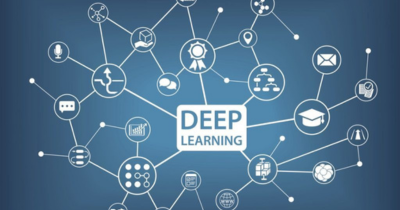
Deep Learning: Deep learning is currently the most prominent and widely successful method in artificial intelligence. Despite having played an active role in earlier artificial intelligence and neural network research, philosophers have been largely silent on this technology so far. Deep learning is a subset of machine learning (ML), which is a subset of artificial intelligence (AI). What an AI is? Artificial intelligence is a general term that refers to techniques that enable computers to mimic human behaviour. Also, What ML is? Machine learning represents a set of algorithms trained on data that make all this possible.
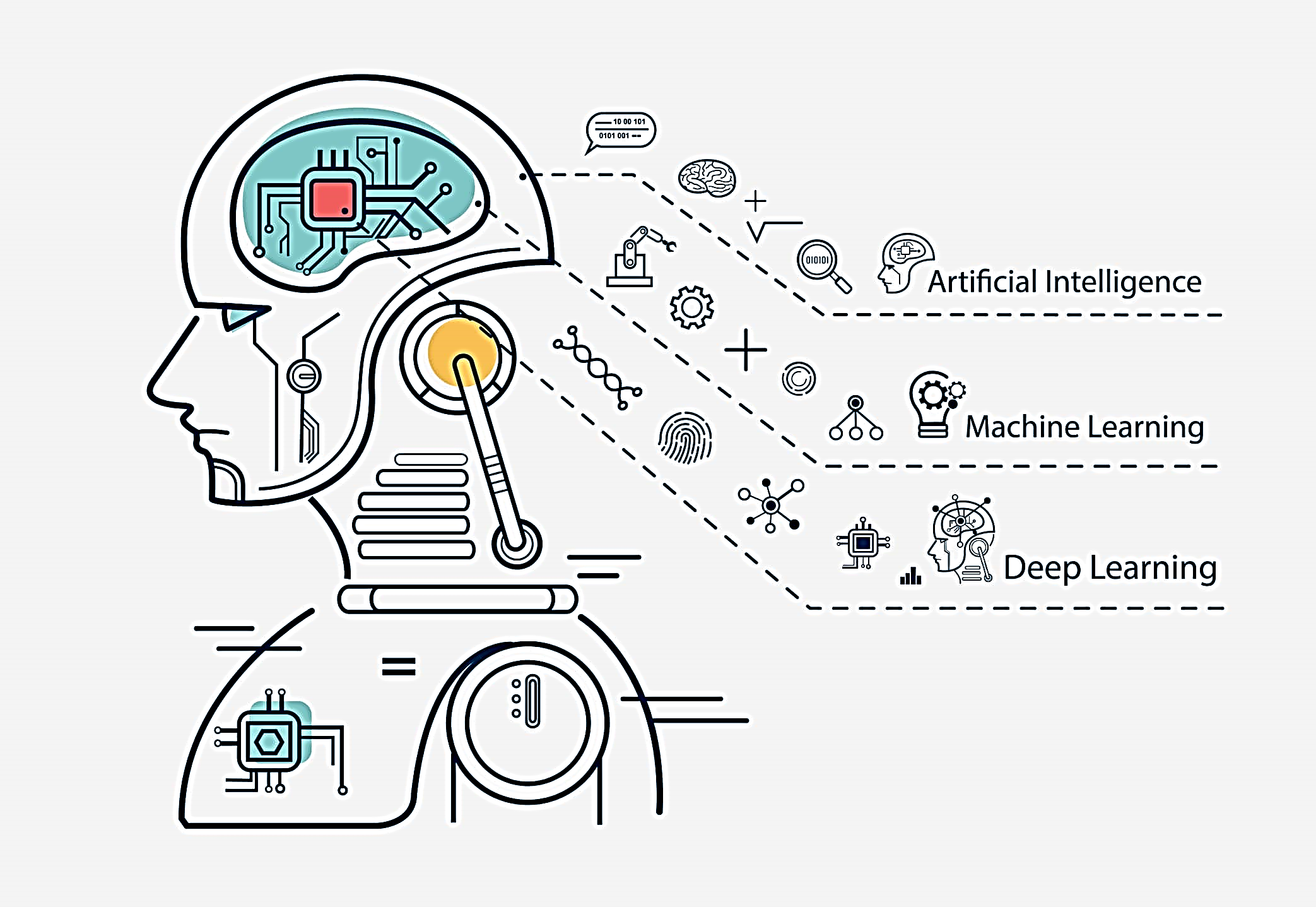
Deep learning algorithms attempt to draw similar conclusions as humans would by continually analysing data with a given logical structure and uses multi-layered structures of algorithms called neural networks. Neural Network is based on the structure of human brain. As human uses their brains to identify patterns and classify different types of information, neural networks also do the same. Neural Networks has an input layer, hidden layers and an output layer. Input layer contains units representing input fields, hidden layers consist of one or more layers and output layers contains unit or units representing the target field. All units in a single layer are connected to other layers with varying connection strengths (or weights). The individual layers are used for detecting and outputting a correct result. It enables us to perform many tasks, such as clustering, classification or regression. Neural networks match classical machine learning tasks, but the latter can’t reciprocate. Artificial neural networks hold distinct abilities, allowing deep learning models to solve problems beyond classical machine learning’s scope. 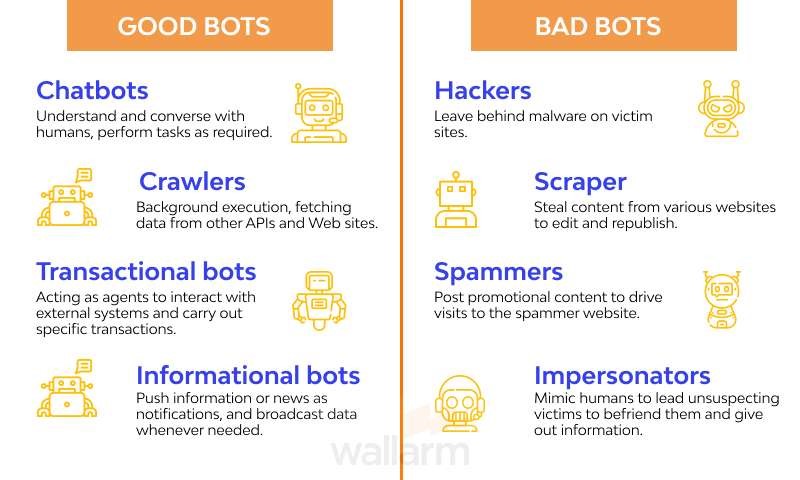 Each type of bot serves a specific function, contributing to various aspects of our online interactions and tasks. From aiding customer interactions to influencing search engine results, these bots demonstrate the intricate interplay between automation and technology in our digital landscape. HUMANOID ROBOT: “Sofia” is a humanoid robot developed by Hong Kong-based company Hanson Robotics. Sofia gained attention worldwide for its human-like appearance and ability to engage in conversation. It is designed to resemble a human female. It has a lifelike face with expressive features, including moving eyes, eyebrows, and lips. The robot’s appearance is aimed at creating a sense of familiarity and relatability for human interactions. Features and Capabilities: Sofia’s face is equipped with sophisticated mechanisms that allow it to replicate a wide range of human facial expressions, enhancing its ability to communicate effectively. It is programmed with natural language processing (NLP) algorithms, enabling it to engage in conversations with people. It can respond to questions and comments, and its responses are generated based on its programming and the input it receives. While Sofia’s interactions are primarily based on pre-programmed responses, the robot can also adapt and learn from conversations to some extent. It has the capacity to remember certain user interactions and preferences. Sofia has made numerous public appearances at conferences, events, and media interviews. Its presence showcases advancements in robotics and AI technology and sparks discussions about the future of human-robot interaction. Sofia has been programmed to understand and engage in discussions about various topics, including culture, art, and current events. It aims to create an interactive and engaging experience for its audience. While Sofia’s capabilities are impressive, it’s important to note that it operates within predefined parameters and doesn’t possess full human-like consciousness or emotions. Its interactions are based on algorithms and data analysis.
 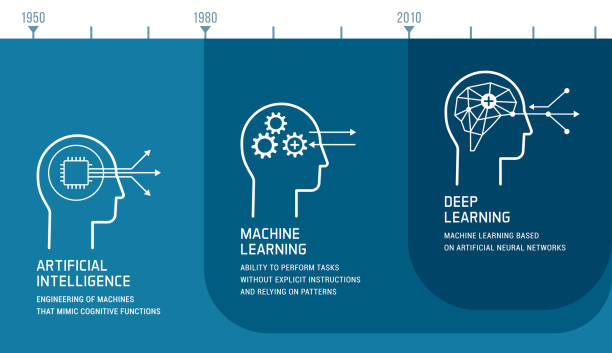 The remarkable progress in artificial intelligence, particularly in recent years, can be largely attributed to the significant strides made in deep learning. Devoid of deep learning’s contributions, pivotal innovations like self-driving cars, interactive chatbots, and intuitive personal assistants such as Alexa and Siri might have remained out of reach. Notably, Google Translate would have remained in a rudimentary state, reflecting its status a decade ago, prior to Google’s adoption of neural networks. Similarly, the intricate task of suggesting movies on Netflix would lack direction and sophistication. At the heart of these technological advancements lies the pivotal role played by neural networks, serving as the backbone for their implementation and success. How Can We Differ Deep Learning with Machine Learning? Deep learning and machine learning are closely related fields within artificial intelligence, but they differ in their approaches, architectures, and capabilities. Here’s a breakdown of the key differences:
- Hierarchy of Representation:
Machine Learning: In traditional machine learning, algorithms are designed to extract features from input data and make predictions based on those features. These features are often handcrafted by domain experts. Deep Learning: Deep learning models automatically learn hierarchical representations of data through layers of interconnected nodes, called neurons. These models can learn intricate features and patterns directly from raw data, reducing the need for manual feature engineering.
- Feature Extraction:
Machine Learning: Feature engineering is a critical step, where domain knowledge is used to select and design relevant features for the model to work effectively. Deep Learning: Deep neural networks can learn features from the data themselves, often eliminating the need for extensive feature engineering.
- Architecture:
Machine Learning: Traditional machine learning algorithms, such as decision trees, support vector machines, and linear regression, are commonly used for classification and regression tasks. Deep Learning: Deep learning models are typically neural networks with multiple layers, allowing them to capture complex relationships in the data. Convolutional Neural Networks (CNNs) are used for image-related tasks, Recurrent Neural Networks (RNNs) for sequences, and Transformers for tasks involving attention mechanisms.
- Performance and Scale:
Machine Learning: While machine learning models can perform well on various tasks, their performance might plateau as the complexity of data or tasks increases. Deep Learning: Deep learning models excel at handling large-scale, complex data and can achieve state-of-the-art performance in various domains, such as image recognition, natural language processing, and speech synthesis.
- Data Requirements:
Machine Learning: Machine learning models often require curated, pre-processed, and well-structured data to perform effectively. Deep Learning: Deep learning models can work with raw and unstructured data, but they often benefit from larger datasets to generalize well and avoid overfitting.
- Computational Resources:
Machine Learning: Many traditional machine learning algorithms are computationally less intensive and can be trained on relatively modest hardware. Deep Learning: Training deep learning models, especially deep neural networks with numerous layers, demands significant computational power and resources. Graphics Processing Units (GPUs) or even specialized hardware like Tensor Processing Units (TPUs) are often used to accelerate training. In summary, deep learning is a subset of machine learning that leverages neural networks to automatically learn hierarchical representations from data. It excels in handling complex tasks and unstructured data, but it requires more computational resources compared to traditional machine learning algorithms. How Do Deep Learning Neural Networks Work? Deep learning neural networks work by simulating the way the human brain processes information. They consist of interconnected layers of artificial neurons that process data in a hierarchical manner, gradually extracting higher-level features and patterns from the input data. Here’s a simplified overview of how they work:
- Input Layer: The process begins with the input layer, where the raw data is fed into the network. Each neuron in this layer corresponds to a specific feature or input element.
- Hidden Layers: Between the input and output layers, there are one or more hidden layers. Each hidden layer consists of multiple neurons that process the data and extract increasingly abstract features. Neurons in one layer are connected to neurons in the adjacent layers, and the connections have associated weights.
- Weights and Activation: Each connection between neurons has a weight that determines its strength. Data from the input layer is multiplied by these weights as it travels through the layers. The weighted sum is then passed through an activation function, which introduces non-linearity to the network. Common activation functions include ReLU (Rectified Linear Activation) and sigmoid.
- Learning: During the training phase, the network adjusts the weights of the connections to minimize the difference between its predicted output and the actual target output. This is done using a process called backpropagation, where the network computes the gradient of the error with respect to the weights and updates them accordingly. This iterative process helps the network learn to make better predictions.
- Deep Architecture: The term “deep” in deep learning refers to the multiple hidden layers in the network. Deeper networks have more capacity to capture complex patterns in the data, which is particularly useful for tasks involving images, speech, and text.
- Output Layer: The final hidden layer’s output is processed through the output layer to produce the network’s prediction or classification. The structure of the output layer depends on the specific task. For example, it might use SoftMax for classification or a linear activation for regression.
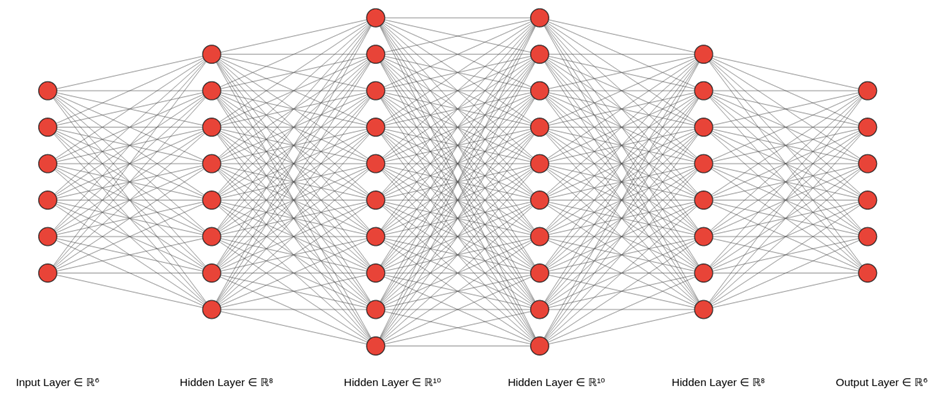 Deep learning neural networks, particularly Convolutional Neural Networks (CNNs) for images, Recurrent Neural Networks (RNNs) for sequences, and Transformers for natural language processing, have demonstrated exceptional performance in various AI tasks. The learning process involves iteratively adjusting the weights to minimize errors, allowing the network to learn complex representations and patterns from data. Deep Learning Models:
- Feedforward Neural Networks (FNN): These are the simplest form of deep learning models, they process data in one direction, from input to output.
- Convolutional Neural Networks (CNN): Primarily used for image recognition and computer vision tasks.
- Recurrent Neural Networks (RNN): Designed for sequences of data, they are used for tasks like language modelling and speech recognition.
- Long Short-Term Memory Networks (LSTM): A type of RNN, LSTMs are equipped with mechanisms to better handle long-range dependencies in sequences.
- Gated Recurrent Units (GRU): Like LSTMs, GRUs are another type of RNN designed to address the vanishing gradient problem.
- Autoencoders: Autoencoders are used for unsupervised learning and dimensionality reduction.
- Generative Adversarial Networks (GAN): They are used for generating realistic data, such as images, music, and text.
- Transformers: Transformers have gained popularity in natural language processing tasks. They are used in tasks like machine translation and language generation.
- Deep Reinforcement Learning: Combining deep learning with reinforcement learning. They have been successful in game playing, robotics, and autonomous systems.
These models have revolutionized various fields by enabling machines to perform tasks that were previously challenging for traditional machine learning algorithms. Advantages:
- Automated Feature Learning
- Versatility
- Transfer Learning
- Reduced Human Intervention
- Big Data Utilization
- Continuous Improvement
- Real-World Impact
- Scalability
- Future Potential
Disadvantages:
- High Computational Demands
- Complexity
- Overfitting
- Hyperparameter Sensitivity
- Black Box Nature
- Limited Robustness
- Biased Learning
- High Energy Consumption