



Unlocking the Power of Data Science: A Journey into the World of Insights and Discovery With more information than we have ever had, data science grows in significance as a valuable and effective device for companies, researchers, and those that make choices. By being able to process large amounts of data to produce valuable insights, data science has dramatically transformed the way we interpret, evaluate, and use intelligence. In this blog, let us journey into the amazing world of data science as we find out what it is all about, why it matters, and how it is reshaping different sectors. What is Data Science? Data science is an interdisciplinary field that involves proficiency in statistics, computer science, domain knowledge and data visualization to get meaningful insights from data. It is a broad set of skills and tools, including data gathering, data wrangling, data analysis, and machine learning. These tools help data scientists to make sense of the chaotic data, predict future trends and make data-driven decisions. The Data Science Process
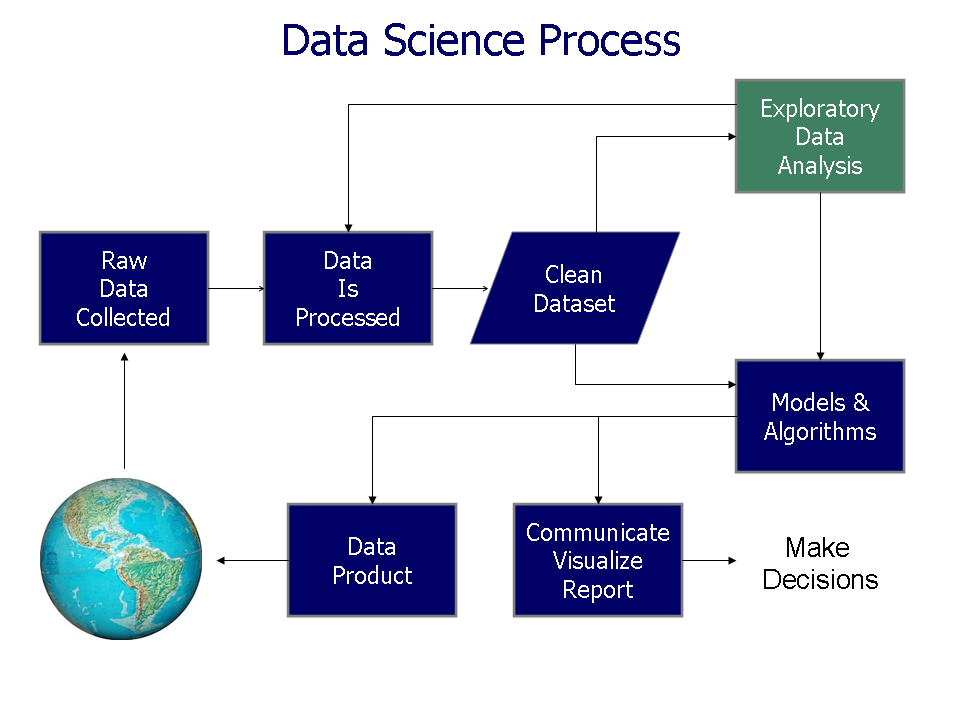
Data Collection: The first step in any data science project is gathering relevant data. This data can come from various sources, including databases, sensors, social media, and more. Data Cleaning and Preprocessing: Raw data is often messy and inconsistent. Data scientists spend a significant amount of time cleaning and preprocessing data to ensure its accurate and suitable for analysis. Exploratory Data Analysis (EDA): EDA involves visualizing and summarizing data to gain a better understanding of its characteristics. This step helps identify patterns, outliers, and potential insights. Feature Engineering: Data scientists create new features or transform existing ones to improve the performance of machine learning models. Model Building: Machine learning algorithms are applied to the prepared data to build predictive models. These models can be used for classification, regression, clustering, and more. Model Evaluation: Models are evaluated using various metrics to assess their performance. Cross-validation and testing on unseen data are common practices. Deployment and Monitoring: Once a model is deemed successful, it is deployed in a production environment. Continuous monitoring ensures its performance remains optimal. Applications of Data Science 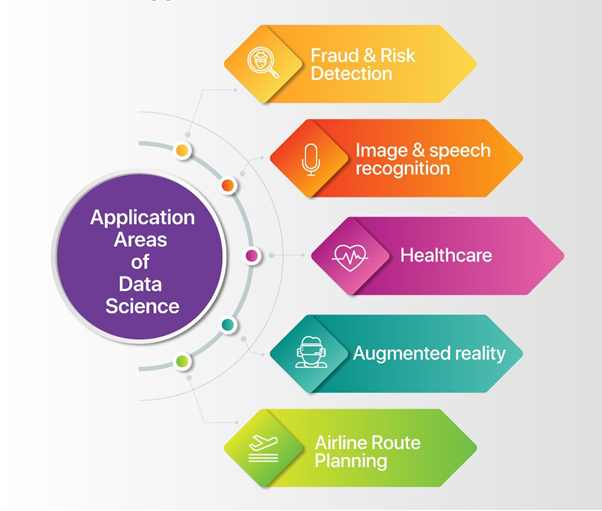 Data science has a broad range of applications across industries: 1. Healthcare: Data science is used for disease prediction, patient diagnosis, and personalized treatment plans. It also plays a significant role in managing healthcare operations and optimizing resource allocation. 2. Finance: In the financial sector, data science is employed for fraud detection, credit risk assessment, algorithmic trading, and portfolio management. 3. Retail and E-commerce: Data-driven insights drive product recommendations, demand forecasting, inventory management, and customer segmentation in retail and e-commerce. 4. Marketing: Data science informs marketing strategies through customer profiling, A/B testing, and predicting customer behaviour. 5. Manufacturing: Manufacturers use data science for quality control, predictive maintenance, and supply chain optimization. 6. Environmental Science: Environmental scientists utilize data science to model and predict climate patterns, track wildlife migration, and optimize renewable energy sources. The Future of Data Science As technology continues to advance, data science will evolve with it. Here are some trends shaping the future of the field: 1. Artificial Intelligence and Deep Learning: AI (Artificial Intelligence) and deep learning will play an increasingly prominent role in data science, enabling more complex analyses and predictive models. 2. Ethical Data Science: As data privacy concerns grow, ethical considerations and responsible AI will become integral to data science practices. 3. Edge Computing: The rise of edge computing will bring data analysis closer to the source of data generation, enabling real-time decision-making. 4. Automation: Automated machine learning (AutoML) tools will simplify model development and democratize data science. Conclusion Data science is a fast growing and always changing disciplines that enable people, and organization to be data driven. If you are eager to solve problems in a complex way, get some insight, or even innovate in different areas, at the end of the day it is all about the data and data science will open the door for you in this digital world. The data science world is a vast land filled with great opportunities and by learning and implementing the tactics mentioned above from this extensive blog, you are good to start.