


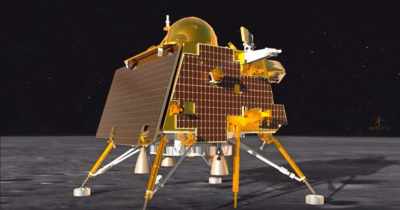
The story behind this mission: The Indian space program initially had no plans for advanced missions such as human spaceflight or extraterrestrial exploration. Only after ISRO acquired the capacity to build satellites and orbital launch vehicles, notably the PSLV, did the idea of India’s first lunar exploration mission in the early 2000s become a possibility. The concept of a lunar scientific mission was initially proposed during a 1999 meeting of the Indian Academy of Sciences (IAS) and subsequently championed by the Astronautical Society of India (ASI) in 2000. Chandrayaan-1: Following the proposals made by the Indian Academy of Sciences in 1999 and the Astronautical Society of India in 2000, the establishment of a National Lunar Mission Task Force (NLMTF) ensued. This task force included ISRO and prominent Indian scientists and technologists from across the country, who were tasked with conducting a feasibility study. Subsequently, the study report underwent review by a peer group comprising 100 scientists from diverse fields. On August 15, 2003, then-Prime Minister Atal Bihari Vajpayee announced the Chandrayaan project, initially estimated at ₹350 crore (US$44 million). In November of that year, the government approved the project, which comprised an orbiter designed for mineralogical and chemical mapping of the lunar surface. During the orbiter’s assembly phase, President A.P.J. Abdul Kalam suggested the addition of another instrument to be dropped on the lunar surface, leading to the incorporation of the Moon Impact Probe (MIP). The MIP was designed to acquire close-range images, collect telemetry data for future soft-landing missions, and measure lunar atmosphere constituents. The project required India to establish its deep space network and had a total cost of ₹360 crore (US$45 million). Chandrayaan-1 was successfully launched on October 22, 2008, entering lunar orbit on November 10, marking India as the fifth nation to orbit the Moon. Four days later, the MIP landed in the Shackleton crater on the lunar south pole, confirming the existence of lunar water, a discovery publicly confirmed by NASA’s Moon Mineralogy Mapper onboard the Chandrayaan-1 orbiter on September 24, 2009. Though intended to last two years, the mission concluded on August 28, 2009, when contact with the orbiter was lost.
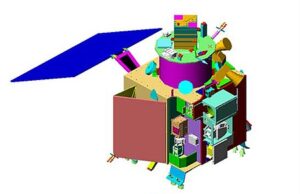
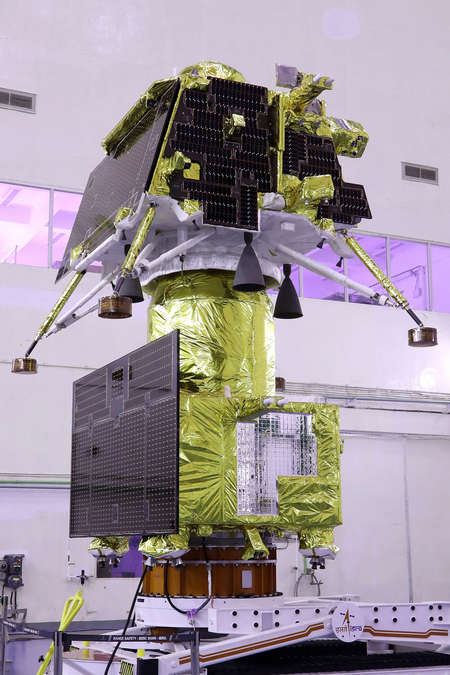
Chandrayaan 1 Chandrayaan-2: After the success of Chandrayaan-1, plans were in motion for a ₹425 crore (US$53 million) follow-up mission with a 2012 launch target. While Abdul Kalam suggested a collaboration with the United States for Chandrayaan-2, aimed at a soft landing near the lunar south pole to study lunar water, an agreement between ISRO and Russia’s Ros cosmos had already been signed in 2007 for Chandrayaan-2. ISRO was tasked with launching, orbiting, and deploying the rover, while Ros cosmos would provide the lander. ISRO completed spacecraft design and payload selection in 2009, aiming for a 2013 launch. However, delays arose when Russia’s lander development was postponed due to issues from the Fobos-Grunt mission. Russia proposed changes, requiring ISRO to reduce the rover’s mass due to an increased lander mass. With a delayed timeline and Russia’s request for India to assume greater project risk, India decided to undertake the entire project independently. This led to repurposing the Chandrayaan-2 orbiter hardware for the Mars Orbiter Mission in 2013. With the Russian agreement falling apart, India was left alone and now had complete responsibility for the project including the development of lander technology. For which, ISRO created a mimic of Chandrayaan-2’s lunar landing site in “Challakere”. In 2018, the mission encountered a second delay as ISRO implemented significant design modifications to the spacecraft. These changes included altering the lander’s maneuver, which involved having it orbit the Moon to evaluate the performance of various systems before attempting a landing, diverging from the initial plan of a direct descent upon reaching the designated orbit. Several enhancements were made to the lander, such as the addition of a fifth engine, an increase in the diameter of the landing legs, incorporation of two extra propellant tanks, and the inclusion of supplementary support systems for power, structure, and thermal control. In February 2019, during a landing test, the Chandrayaan-2 lander sustained minor damage to two of its legs due to a faulty test orientation. The launch was rescheduled for the second quarter of that year. Finally, on July 22, 2019, Chandrayaan-2, valued at approximately ₹800 crore (US$100 million), was successfully launched on LVM3, overcoming several obstacles encountered throughout the decade-long mission development. After a series of orbit-raising maneuvers and the trans-lunar injection, Chandrayaan-2 entered lunar orbit on August 20. However, on September 6, 2019, during its descent to the lunar surface, contact with the lander was lost after it crash-landed. ISRO Chairman K. Sivan noted that the lander had been operating as expected until it was just 2.1 km (1.3 mi) above the surface when it began to deviate from the intended trajectory. Four years later, ISRO Chairman S. Somanath identified three major factors contributing to the failure: the presence of five engines generating higher thrust, causing errors to accumulate; the lander’s inability to turn quickly at the high pace required; and the small 500×500 m landing site chosen, providing limited margin for error. 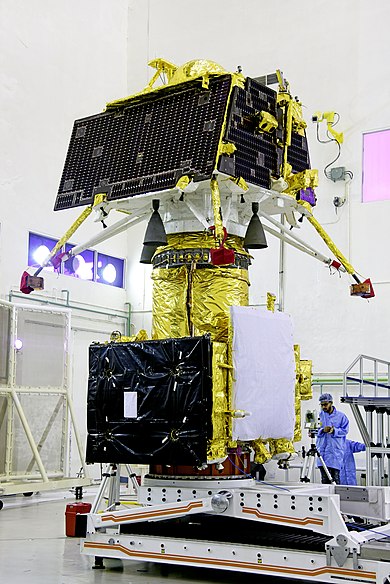 Chandrayaan-2 Chandrayaan-3: Originally planned for an early 2021 launch, Chandrayaan-3 faced delays due to the COVID-19 pandemic in India. While the propulsion module had undergone testing prior to the pandemic, the subsequent lander and rover tests were postponed. These setbacks pushed the mission’s tentative launch date to the third quarter of 2022. Further adjustments, including strengthening the landing legs, instrument improvements, enhanced fail-safe configurations, and additional testing, led to a rescheduled launch in the second quarter of 2023. In May 2023, the spacecraft’s payloads were in their final assembly stage at the U R Rao Satellite Centre, targeting a launch in early July. On July 14, 2023, Chandrayaan-3 was successfully launched on LVM3 and entered the lunar sphere of gravitational influence on August 5, 2023. On August 23, 2023, the lander Vikram achieved a successful soft landing in the lunar south pole region, marking humanity’s first soft landing in this area and making India the fourth country to soft land on the Moon, following the Soviet Union, United States, and China. Shortly after landing, the rover Pragyan descended from the ramp and traveled 8 meters (26 feet), making India the third country to operate a robotic rover on the Moon, joining the ranks of the Soviet Union and China.
  Chandrayaan 3 AFTER LANDING TO MOON:
- ISRO shared data gathered from ChaSTE (Chandra’s Surface Thermophysical Experiment), one of the four instruments located on the lander module. ChaSTE’s primary objective was to investigate the heat conductivity of the Moon’s surface and record temperature variations at various points both on and beneath the surface, ultimately creating a thermal profile of the Moon. The initial data release revealed a substantial temperature disparity just above and below the lunar surface. According to ISRO’s graphical representation, surface temperatures exceeded 50°C (122°F) but rapidly dropped to nearly -10°C (14°F) just a few millimetres below the surface. These findings indicated that the lunar topsoil exhibited poor heat conductivity, effectively insulating the sub-surface from heat. While consistent with previous lunar thermal profiles, these measurements provided the first direct assessment of temperatures at the lunar south pole. ISRO scientist BH Darukesha noted that the extreme range of temperatures, including a high of 70°C (158°F) near the surface, was unexpected.
- On August 29, ISRO announced a significant discovery made by the Pragyan rover’s laser-induced breakdown spectroscope (LIBS) instrument. This instrument provided “unambiguous” confirmation of the presence of sulphur in the lunar surface near the south pole, marking the first-ever in-situ measurements of sulphur on the Moon. While sulphur had been previously detected on the Moon, this finding represented the first confirmation of its presence at the south pole by the rover. Noah Petro, a NASA project scientist, praised the discovery, noting that while sulphur had been known from Apollo program samples, the rover’s findings were a “tremendous accomplishment.” In addition to sulphur, the rover also detected various other elements, including aluminium (Al), calcium (Ca), iron (Fe), chromium (Cr), titanium (Ti), manganese (Mn), silicon (Si), and oxygen (O). ISRO further reported that the search for hydrogen (H) was ongoing.
- On August 31, ISRO unveiled plasma density data gathered by the RAMBHA Instrument on the Vikram lander. The data indicated relatively low plasma densities in the vicinity of the lunar surface, ranging from 5 to 30 million electrons per cubic meter during the early stages of the lunar day. The objective of the probe is to investigate the fluctuations in the near-surface plasma environment over the course of the lunar day.
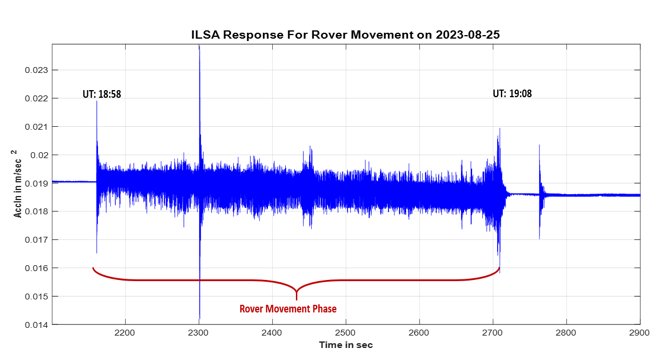
- On the same day, ISRO shared data obtained from the ILSA payload on the lander, offering vibration measurements of the rover’s movement on August 25 and another presumed natural event on August 26. The cause of the latter event is currently under investigation, with suspicions pointing toward a potential moonquake.
-
- ISRO also found lunar water on which john bridges mentioned that due to the Moon’s low pressure, it would be “unlikely” for Chandrayaan-3 to detect liquid water near the surface – even in regions where temperatures are above freezing – because the water would likely boil away. However, at greater depths, the pressure might increase sufficiently to allow for the existence of liquid water. He also stated that it’s “too early” to fully interpret the data from Chandrayaan-3. He praised the mission for collecting data and noted that India’s engineers were making commendable progress, highlighting that they appeared to be advancing beyond certain other space agencies, specifically mentioning Russia.